Media technology planning

Media and video conferencing technology planning

A room only works reliably if architecture, electrical, acoustics and technology are thought of together from the outset. We plan your media and video conference rooms independently of the manufacturer — from needs analysis to commissioning.

Why professional planning is crucial

Each room is unique — a modern conference room, a large event hall or a flexible training room all place different demands on media technology. Use, room size, lighting conditions and the expectations of future users determine which solution really fits. Media technology is no longer an individual task. It intervenes in architecture, electrical installations, networks, lighting and room acoustics. Anyone who procures individual components without an overall concept gets rooms that are equipped but not functional: Echo in the video conference, displays of the wrong size, microphones that also transmit ventilation noise, touch panels that no one can operate.

Early specialist planning ensures that:

  • all trades (architecture, electrical, IT, HVAC, drywall) interlock cleanly
  • Interfaces are defined before the construction phase, not later
  • The investment fits the actual use — no over-engineering, no gaps
  • No budget is lost for unnecessary iterations, subsequent revisions or oversized signaling technology
  • After handover, the room works without a technician in the background
  • Technology and buildings remain future-proof — adjustments and expansions are possible without major structural changes
  • Technology, room design and operating concept work together harmoniously — functionally and aesthetically

The earlier we start a project, the lower the additions, provisional costs and follow-up costs. Good planning is not an additional item in the budget, but the basis for keeping everything else within budget — and creating a space that simply works in the end.

We plan the media technology for your (hybrid) rooms

Companies and authorities

  • Huddle Rooms
  • meeting rooms
  • Executive rooms
  • Mobile video conferencing systems
  • Shareable meeting rooms with video conference

Education and conference

  • auditoriums
  • Digital classrooms
  • training rooms
  • seminar rooms
  • multifunctional rooms

Hostel, restaurants and museums

  • hotels
  • restaurants
  • museums
  • showrooms
Media technology planning

What is taken into account during planning

Architecture planning

Architectural integration

    Visual axes, table layout, ceiling heights, glass surfaces and drywall determine what is technically possible at all. We coordinate display positions, camera angles, microphone layout and cable routes together with architects and interior designers.

    Design and room aesthetics

      Technology should have an effect without dominating the room. We plan in such a way that no cables remain visible and that appliances blend harmoniously with furniture, ceilings and walls. At the same time, we ensure technical sustainability: Devices can be replaced without opening furniture or components, cable routes remain accessible, brackets and installations are designed for common device formats.
      Plan design
      Mechanical planning

      Mechanical planning

        Brackets, ceiling suspensions, loads, inspection openings, furniture integration, cable ducts and floor tanks. This is where it is decided whether technology can be installed invisibly or whether visible surface solutions are created afterwards. Where standard solutions do not fit, we also design, plan and manufacture special solutions — such as custom-made brackets, furniture installations or special structures.

        Electrical planning

          The focus is on the correct positioning of power outlets, network and data connections as well as a sufficient reserve for subsequent expansions. We plan empty conduits and cable routes in such a way that additional displays, cameras or controls can be added without chiseling work. PoE supply, control cabinet placement and connection to building automation are coordinated together with the electrical planner.
          Electrical planning
          Acoustic planning

          Acoustic planning

            Room acoustics are the most common source of error in video conferences — not the Internet. We evaluate reverberation time, reflection surfaces (glass, concrete, table) and plan the acoustic measures to suit the microphone and loudspeaker design.
            microphones: Choose between ceiling array, desk or interface microphone according to room size, seating arrangement and usage scenario.
            loudspeaker: Consistent speech intelligibility at every seat, tailored to the room.
            Room acoustics: Absorbers, ceiling panels and wall elements are placed in such a way that microphones and loudspeakers function cleanly.

            Cameras and displays

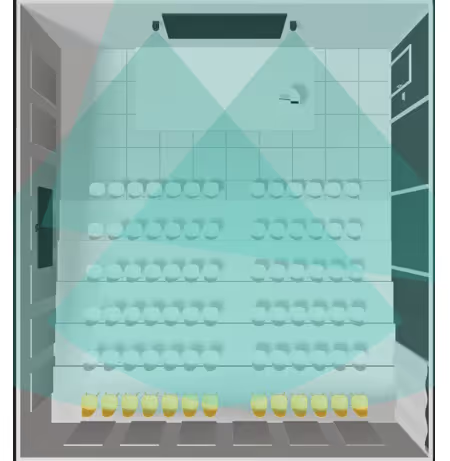
            Display size, resolution and number are adjusted to the largest viewing distance and content (text, tables, video). With cameras, we plan the image section, coverage area and auto-framing so that all participants can be seen in full format — even in elongated rooms.
            Camera planning
            System design planning

            Functional planning — system design

              The aim is a system with as few but reliable components as possible. Each additional interface is a potential source of error. We plan the signal paths, codecs and control logic so that the system remains operable even after software updates and personnel changes.

              Operating concept

                The best technology is useless if no one can operate it. Our claim: a uniform operating concept across all rooms, with the push of a button, the entire room starts. The display, camera, microphones, sound, lighting and shading automatically move into the right scene. Automation replaces the event technician in the background — the user opens the meeting, not the room.
                Operating concept planning

                Examples that were planned by us

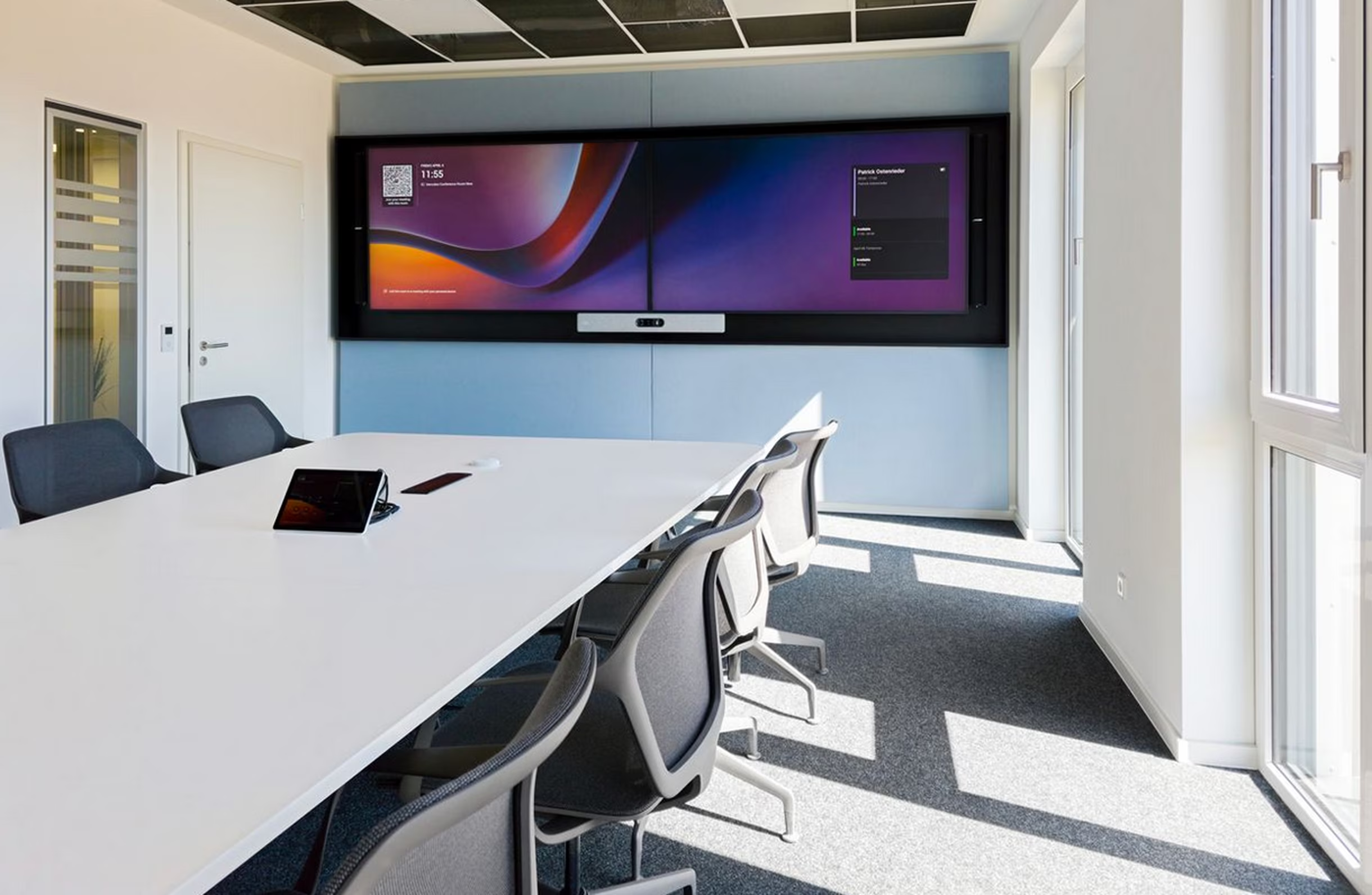
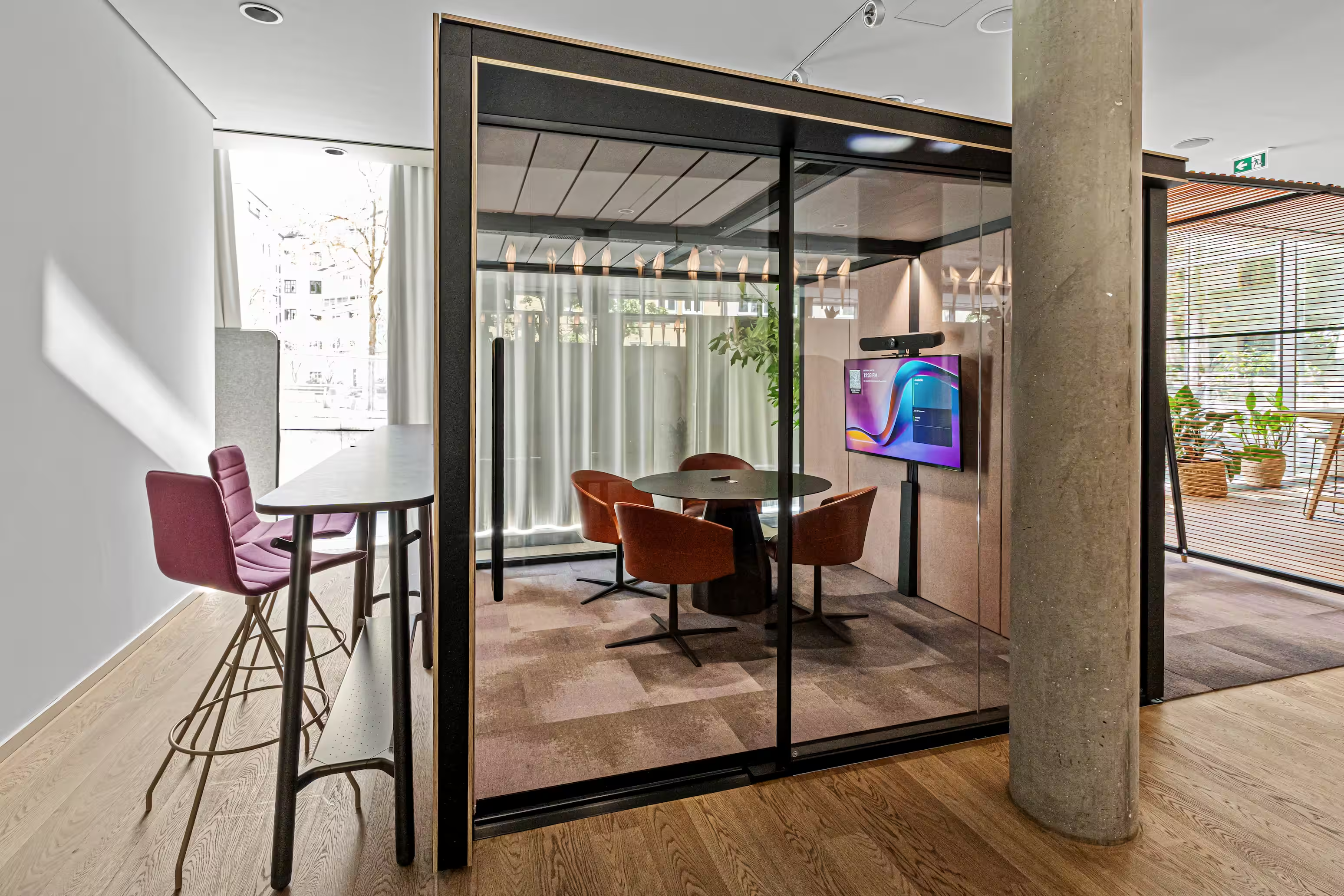
                Conference 1 exampleConference 1 exampleConference 1 exampleConference 1 example

                Why we are the right planner

                We have been planning conference, training and event rooms for many years — and are also implementing these projects with our own teams. This results in some advantages that a pure planning office cannot offer in this form:

                How we plan:

                • Accurate and with design standards, at the same time flexible, pragmatic and present on the construction site
                • Lean system design — few, reliable components instead of unnecessary complexity
                • Vendor-independent evaluation of technology — with a view to software maintenance and long-term support
                • Exact understanding of everyday needs, because we also install many rooms and look after them for years
                • Premium solutions that fit the available budget

                What we don't do:

                • Over-engineering and technology that is not used in everyday life
                • Tunnel vision of our own trade — we don't plan in such a way that other trades incur unnecessary additional costs
                • More components than necessary — more isn't automatically better

                We plan every space as if it were our own.
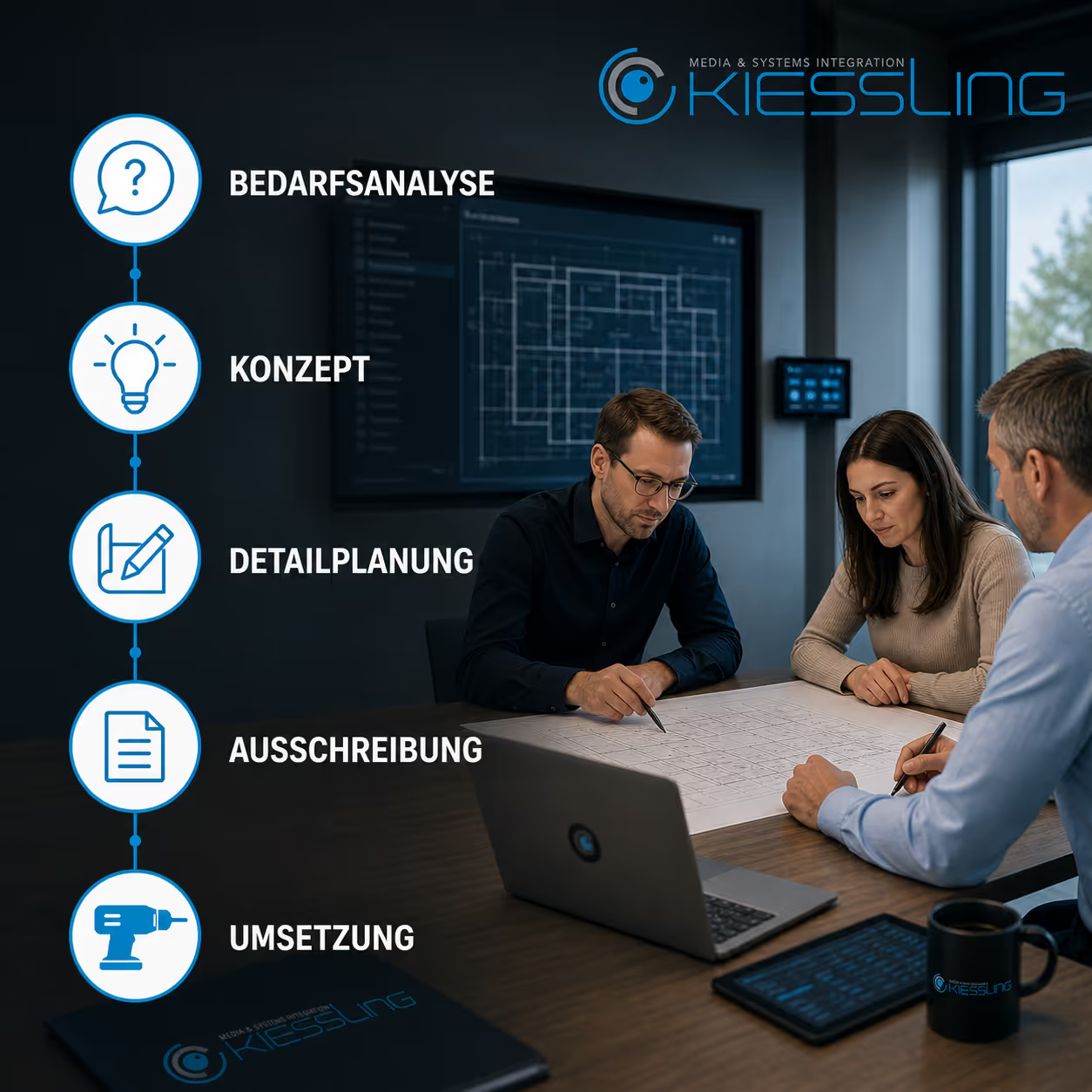
                This is how planning works

                This is how planning works

                1. Needs analysis: together with stakeholders
                2. concept: room types (standardization vs. individualization), equipment levels, budget framework
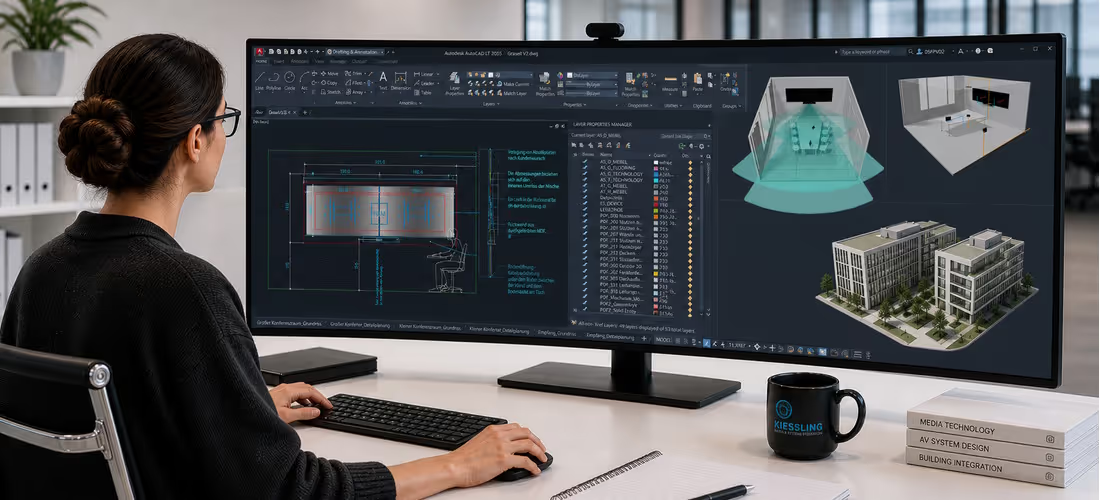
                3. detailed planning: Architectural planning (2D) with device positioning and cable drawing list, block circuit diagram, electrical specifications, parts lists
                4. Where applicable tendering: Product-neutral or as a turnkey KIESSLING solution
                5. Optionally Implementation: Installation, programming, training, documentation and ongoing service

                What does specialist media technology planning cost?

                The effort depends on project size, complexity and planning depth — from an individual conference room to an entire office location. As a guide:
                • Individual conference room: usually around one daily rate (855€ net)
                • Multifunctional room or auditorium: several daily rates, depending on size and range of functions
                • Complete office or office complex: several daily rates, but planning costs can be significantly reduced by classifying and standardizing room types
                For larger projects, we are happy to make a specific offer based on your room schedule and the desired planning depth.
                Get a personal offer

                Selection of our customers

                We are your partner for professional media and video conferencing technology in the greater Munich area — with over 1,500 completed projects for companies of all sizes, from individual meeting rooms to major projects with 50+ rooms.

                customer projects
                customer projects
                customer projects
                customer projects
                customer projects
                customer projects
                customer projects
                customer projects
                customer projects
                customer projects
                customer projects
                customer projects
                customer projects
                customer projects
                customer projects
                customer projects
                customer projects
                customer projects
                customer projects
                customer projects
                customer projects
                customer projects
                customer projects
                customer projects
                customer projects
                customer projects
                customer projects
                customer projects
                customer projects
                customer projects
                customer projects
                Map Kiessling Medientechnik Munich
                location

                KIESSLING Medientechnik GmbH

                Heßstraße 41
                80798 Munich
                Appointments by appointment only
                Phone
                089 21550146*
                *Please use the enquiry form or email for initial contact.
                You will receive an extension as you proceed.
                As an existing customer, you can find them in our emails.